Next week we’ll give you a video presentation of our first-half 2026 wrap-up and offer some thoughts as we enter the second half of the year.
Beyond the MOU signed with Iran — which markets and the G7 have basically treated as a likely success — Washington has spent June handing investors a set of future catalysts. They won’t move quarterly earnings substantively this year, and some may not reach the real economy until well into 2027 and later, but perhaps that’s the point, in an important election year: anticipation seeps into the market’s consciousness long before the accruals to the bottom line are evident in earnings reports.
Bullish longer-term policy announcements can hand the embattled incumbents who are allied with the administration something concrete to campaign on into the November midterms. Conveniently, these are just proposed policies; proposals tend to be a lot less complicated than when policy gets into implementation. In turn, the campaigning can keep a theme alive in the headlines, and therefore alive in the market’s consciousness.
Three items stand out.
Quantum
On June 22 the White House signed two quantum executive orders — one to advance a national quantum R&D and sensor-deployment push, the other to begin migrating Federal systems to “post-quantum cryptography,” encryption built to survive a future quantum codebreaker, on deadlines running through 2030–31. There are layered on top of a roughly $2 billion Commerce Department package from May that Would take, via signed letters of intent, minority equity stakes in nine quantum firms, about $1 billion of it into a new IBM foundry venture; GlobalFoundries (GFS) is also receiving a substantial funding allotment for its establishment of a domestic quantum foundry.
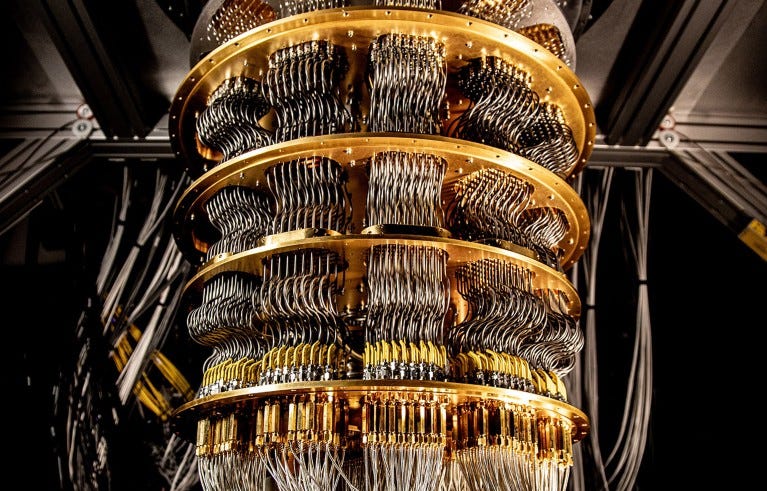
The hardware story is a long-dated bet: the listed pure-plays — such as IonQ (IONQ), Rigetti (RGTI), D-Wave (QBTS), Quantum Computing Inc. (QUBT), and the recently-listed, Honeywell-controlled Quantinuum (QNT) — are pre-profit and priced for perfection (or better), best handled as a small, diversified deployment of “mad money” alongside the deep-pocketed incumbents (IBM, GOOGL, MSFT) for whom quantum may be real but merely incremental upside.
A more immediate thread is the cryptographic migration, which needs to be addressed before commercial quantum viability is even achieved: the cybersecurity, certificate-management, and identity vendors who will be paid to rip out and replace the government’s encryption, and eventually that of the entire economy. That work now has due dates and a procurement pulling it forward. Of course, we note that procurements are much rarer things in quantum than are press releases. For exposure to this post-quantum migration, the most defensible route is the cash-flow positive incumbents where it’s embedded — for example, Palo Alto Networks (PANW), Cloudflare (NET), CyberArk (CYBR), which owns certificate/machine-identity business Venafi), and OKTA on the security side. There are highly speculative microcap pure-plays here — SEALSQ (LAES) and parent WISeKey (WKEY), as well as Arqit (ARQQ) — for the bold or foolhardy. And of course, the most direct beneficiaries of a Federal mandate might be the systems integrators paid to execute it: Booz Allen (BAH), Leidos (LDOS), SAIC, Accenture (ACN), and General Dynamics’ (GD) Information Technology division.
Quantum sensing is the nearest-to-deployment corner of the “quantum information technology” field — atomic clocks, magnetometers, and gravimeters are already crossing into field use, driven mostly by defense demand for navigation and timing that will work when GPS fails or is jammed. Quantum clocks make up the bulk of today’s addressable market, but public exposure is scarce because the best pure-plays are private or recently absorbed: IonQ (IONQ) bought Vector Atomic in late 2025, folding atomic clocks, gravimeters, and inertial sensors into its platform, and SandboxAQ (the Alphabet spinout building quantum navigation) remains private. For listed names, the realistic plays are Microchip (MCHP) for chip-scale atomic clocks via its Microsemi unit, and the defense primes — Lockheed Martin (LMT) chief among them, with Honeywell (HON), Northrop Grumman (NOC), and RTX similarly positioned. The usual caveat applies: with these big companies, sensing is a small line inside a much larger business.
We believe great financial advice starts with truly understanding your goals, needs, and circumstances. Schedule a meeting with our Client Relations Director to discover if Guild Investment Management has a solution that will work for you.
Nuclear
On June 23 the Energy Department’s Office of Energy Dominance Financing — the rebranded Loan Programs Office — issued a conditional commitment for $17.5 billion in “American Nuclear Supply Chain Loans.” The money is not for reactors as such but for the long-lead-time components — the heavy forgings, reactor vessels, steam generators, and specialized parts that take years to fabricate — needed to restart a domestic supply chain that has atrophied since the 1980s.
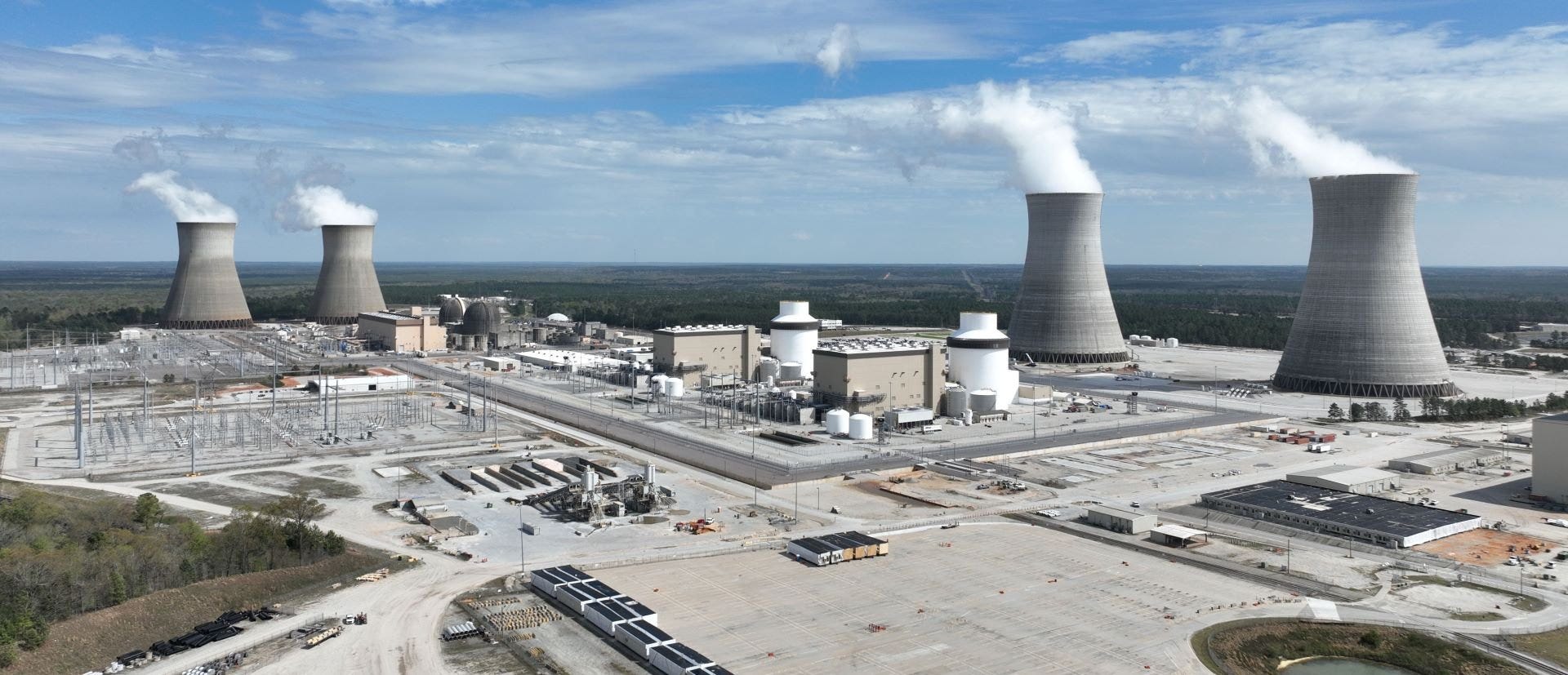
The structure: up to five loans, each backing two Westinghouse AP1000 reactors at a single site, with Westinghouse and its utility partner each posting $500 million of equity per project ($1 billion of private capital) before any Federal money flows. The stated goal is ten new large reactors, on a timeline shortened by up to three years. It builds on the roughly $80 billion strategic partnership Washington struck last October with Westinghouse and its owners, Brookfield and Cameco (CCJ), in which the government took a share of the venture’s upside in return for arranged financing and eased permitting. BWX Technologies (BWXT), the dominant heavy nuclear-component maker in North America, is another obvious beneficiary.
A build-out of this scale pulls in the entire fuel cycle and construction chain. At the front of the cycle are the uranium miners, where Cameco is the blue-chip but hardly the only name — Uranium Energy (UEC), Energy Fuels (UUUU), and NexGen (NXE) offer higher-beta exposure, while the Sprott Physical Uranium Trust (SRUUF) holds spot pounds for those who want the commodity without operating risk. On the enrichment front, western capacity withered during the long reliance on Russian supply — here, Centrus Energy (LEU) is the listed domestic name.
On the hardware side, beyond BWXT, the component and instrumentation suppliers include Curtiss-Wright (CW) for reactor coolant pumps and valves, Flowserve (FLS) for pumps and sealing systems, Graham Corp (GHM) for heat-transfer equipment, and Mirion Technologies (MIR) for radiation detection and nuclear measurement. The engineering-and-construction firms that manage megaprojects are a step removed but indispensable: Fluor (FLR) is the listed name most often cited, though the actual Vogtle AP1000 builder, Bechtel, is private.
This program is specifically about gigawatt-scale AP1000s, but that deliberately leaves out the small-modular and advanced-reactor complex that dominates the more speculative end of the trade — GE Vernova (GEV) with its BWRX-300, plus the pure-plays Oklo (OKLO), NuScale (SMR), and Nano Nuclear (NNE). Different technology, longer odds, but we should still mention them, since they benefit from the same policy tailwind. And for those who would rather not pick within any of this, the uranium and nuclear funds (URA, URNM, NLR) capture the theme.
Housing
The largest housing bill in decades, the 21st Century ROAD to Housing Act, cleared both chambers — 358-32 in the House, overwhelmingly in the Senate — and is headed to the president’s desk, where it may languish as the he demands concessions on unrelated political priorities — though it so obviously addresses the pain-points of his base, it’s hard to imagine he’s really serious about obstructing it if he doesn’t get his way.
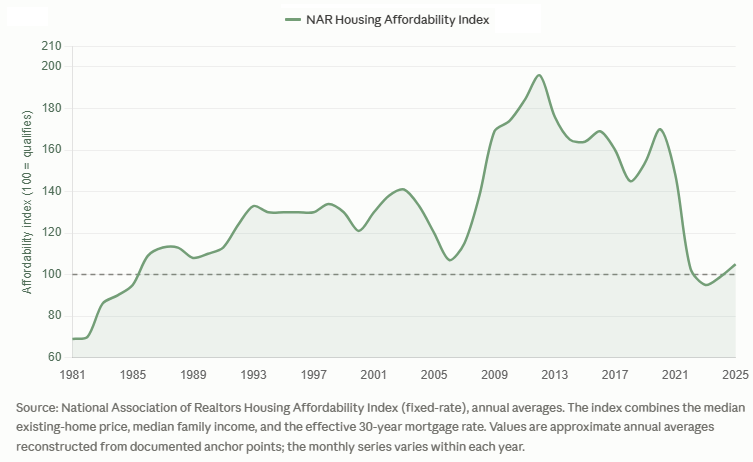
Its fifty-odd provisions mostly attack supply, streamlining Federal environmental review for housing, expanding exemptions for infill and small projects, studying single-stair “point-access” building codes that permit cheaper mid-rise designs, and dangling carrots in front of localities that actually permit and build — for example, a $200 million annual competitive grant program for state and local jurisdictions pursuing “innovative policies, interventions, and programs to increase housing supply.” It also lowers barriers for manufactured and modular homes, and it sharply restricts large institutional investors from hoovering up single-family homes, barring institutional investors that already hold 350-plus single-family homes from buying more, with existing portfolios grandfathered and build-to-rent carved out. All in all, a shrewd populist point that will play well to the president’s voter base, while not wholly alienating his affected allies in the business world.
Housing economists say the effect will be incremental and back-loaded — meaningful over the medium term, not the next two years. The direct beneficiaries, of course, are the homebuilders, who rallied strongly on the news — D.R. Horton (DHI), Lennar (LEN), PulteGroup (PHM), NVR, and affordable-end names such as KB Home (KBH) and Taylor Morrison (TMHC) — and, one step out, the building-products and materials complex: for example, lumber-and-supplies distributor Builders FirstSource (BLDR), insulation from Owens Corning (OC), and finishings from Masco (MAS) and Sherwin-Williams (SHW). The manufactured- and modular-home makers, Cavco (CVCO) and Champion Homes (SKY), sit squarely in the bill’s sights in the good sense, while the big-box retailers Home Depot (HD) and Lowe’s (LOW) ride the broader volume.
Some Salutary Cautions
The nuclear loans are conditional, the housing effects are admittedly slow, and the quantum hardware names are priced for outcomes a decade out. But each of these gives the market a story it can underwrite in advance and a slogan candidates can repeat through November — and in the short run, narrative and positioning move prices at least as much as cash flow does. The fruits may be a 2027 affair. The enthusiasm, as ever, tends to arrive first — even if it may have an expiry date sometime after November 3.
Lastly, when it comes to investing in longer-term themes, many companies will have no earnings (and maybe even no revenues) for some time. Just be aware of the air pockets underneath the stock prices of companies who do not yet have financials supporting lofty hype-driven market expectations.
Thanks for listening; we welcome your calls and questions.
General Disclosures About This Newsletter
The publisher of this newsletter is Guild Investment Management, Inc. (GIM or Guild), an investment advisor registered with the Securities and Exchange Commission. GIM manages the accounts of high net worth individuals, trusts and estates, pension and profit sharing plans, and corporations, among other clients.
Your receipt of this newsletter does not create a personal investment advisory relationship with GIM although some recipients may also be advisory clients of GIM. GIM has written investment advisory agreements with all its personal advisory clients, which sets forth the nature of that relationship.
The newsletter makes general observations about markets and business and financial trends and may provide advice about specific companies and specific investments. It does not give personal investment advice tailored to the needs, objectives, and circumstances of individual readers. Whether investment ideas and recommendations are suitable for individual readers depends substantially on the personal and financial situation of that reader, which GIM, as the publisher of the newsletter, makes no effort to investigate.
GIM attempts to provide accurate content in its newsletters to the extent such content is factual rather than analysis and opinion, but GIM relies primarily on information compiled or reported by third parties and does not generally attempt to independently verify or investigate such information. Moreover, some content and some of the assumptions, formulas, algorithms and other data that affect the content may be inaccurate, outdated, or otherwise flawed. GIM does not guarantee or take responsibility for the accuracy of such information.
Please note that investing in stocks, other securities, and commodities is inherently risky, and you should rely on your personal financial advisors and conduct your own due diligence in connection with any investment decision.
A Special Comment for Guild’s Clients
If you are an investment advisory client of GIM who is receiving this newsletter, please note that the fact that a general recommendation is made of a particular security, commodity, or investment area to its newsletter subscribers does not mean that investment is suitable for you or should be purchased by you. For example, GIM may already have purchased such securities on your behalf or purchased securities in the same industry (and an increase in the position for you may represent too much concentration in one security or industry), or GIM may believe the investment is not suitable for you based on your risk tolerance or other factors. If you have questions about the recommendations in this newsletter in relation to your account at GIM, please contact Tony Danaher, Rudi von Abele, or Aubrey Ford.
Conflicts of Interest
As of the date of this newsletter, GIM’s investment advisory clients or GIM’s principals owned positions in areas that are the subject of current recommendations, commentary, analysis, opinions, or advice, contained in this newsletter.
GIM and its principals have certain conflicts of interest in its relations with its investment advisory clients and its newsletter subscribers resulting from GIM or its principals holding positions for its clients or themselves which are also recommended to its clients. GIM may change the positions of its clients or GIM’s principals may change their positions (increasing, decreasing, and eliminating them) based on GIM’s best judgment at any given time, including the time of publication of the newsletter. Factors that lead GIM to change or eliminate its positions may include general market developments, factors specific to the issuer, or the needs of GIM or its advisory clients. From time to time GIM’s investing goals on behalf of its investment advisory clients or the personal investing goals of GIM’s principals and their risk tolerance may be different from those discussed in the newsletter, and the investment decisions made by GIM for its advisory clients or the investment decisions of its principals may vary from (and may even be contrary to) the advice and recommendations in the newsletter.
In addition, GIM or its principals may reduce or eliminate their positions in an investment that is recommended in the newsletter prior to notifying the newsletter subscribers of such a reduction or elimination. The publication by GIM of a “target price” or “stop loss” for a particular security or other asset does not necessarily represent the price at which GIM intends to sell or will sell any such assets for its advisory clients or the price at which GIM’s principals intend to sell any such assets.
As a consequence of the conflict of interest, GIM’s clients or principals may benefit if newsletter subscribers purchase assets recommended by GIM since it could increase the value of the assets already held by GIM’s investment advisory clients or GIM’s principals. On the other hand, GIM’s principals and clients may suffer a detriment if they seek to acquire additional shares in securities that have been recommended and the price of the securities has increased as a result of purchases by newsletter subscribers.
To help mitigate these conflicts, GIM seeks to avoid recommending the securities of individual companies where GIM or its principals have an ownership position and where the issuer is small or its securities are thinly traded. That way sales by GIM in advance of possible sales by newsletter subscribers would not be likely to cause any significant decrease in the sale price to newsletter subscribers. GIM has a fiduciary relationship with its investment advisory clients and cannot agree on behalf of such clients to refrain from purchases or sales of a security mentioned in the newsletter for a period of time before or after recommendations for purchases or sales are made to its newsletter subscribers.
GIM encourages you to do independent research on the securities or other assets discussed or recommended in the newsletter prior to making any investment decisions and to be especially cautious of investments in small, thinly-traded companies, which are usually the most risky investments that you can make.
Disclaimer of Liability
GIM disclaims any liability for investment decisions based upon recommendations, information, or opinions in its newsletters. GIM is not soliciting you to execute any trade. Nothing contained in GIM’s newsletters is intended to be, nor shall it be construed as an offer to buy or sell securities or to give individual investment advice. The information in the newsletter is not intended for distribution to, or use by, any person or entity in any jurisdiction or country where such distribution or use would be contrary to law or regulation, or which would subject GIM to any registration requirement within such jurisdiction or country.
COPYRIGHT NOTICE
Guild’s current and past market commentaries are protected by U.S. and international copyright laws. All rights reserved. You must not copy, frame, modify, transmit, further distribute, or use the market commentaries, without the prior written consent of Guild. This email or any download from a secure website is meant for only the intended recipient of the transmission, and may be a communication privileged by law. If you received this email in error, any use, dissemination, distribution, or copying of this email is similarly prohibited. Please notify us immediately of the error by return email and please delete this message from your system. Although this email and any attachments are believed to be free of any virus or other defect that might affect any computer system into which it is received and opened it is the responsibility of the recipient to ensure that it is virus free and no responsibility is accepted by Guild Investment Management for any loss or damage arising in any way from its use.